Adventure Time with CRAFT and Our Journey to the United Nations
Siyo and Boozhoo, good day folks. I hope this reading finds you well today. The sun is out and the corn is growing here. I write to you from home today to catch you up on our recent adventures. We were invited to attend the Permanent Forum on Indigenous Issues 2026 (UNPFII). A new realm was reached and interacted with it and Imma share about it.
It all started earlier this year when our media wing, CRAFT Times, collaborated with Crushing Colonialism to do an investigative journalistic piece on the current conversation around AI, data centers, and energy in NDN Country titled: Progress or Digital Colonization? AI Data Centers Sparks Debate on Native Lands. CRAFT’s contribution was mostly our research on nuclear issues on Indigenous lands and new small modular nuclear reactors being proposed to power data centers. We also provided some interviews with Indigenous Activists fighting against data centers on their territories.
It was my first time collaborating with an award-winning and renowned journalist, Jen Deer-In-Water, who I share a common ancestor with known as The Deer In The Water. A-ma U-du-ha A-HA-Wi, the fighting Deer in the moving Body of Water is the name in the Cherokee, our tribe and language in Oklahoma. He was a War Chief from Southeastern Tennessee who fought and protected our northern borders from settler encroachment, even being granted permission by the Cherokee Nation and the United States to remove settlers who illegally squatted on our lands. He also walked on the Trail of Tears and was a part of the rebuilding of the Cherokee Nation upon our arrival in what is now known as Oklahoma. I guess you could say that resistance and the fight is in our blood. This collaboration and journey was a learning experience that I am thankful for.
The article was picked up and republished by a few bigger publications like Counterpunch, Truth Out and Cultural Survival. It gained lots of traction and attention. People were interested in hearing/learning more about the section that covered the connections between the nuclear industry and tech giants. The nuclear issues will become worse and more of a problem as energy needs grow to meet the demands of a massive data center buildout.
Harms from the entire nuclear fuel chain in Indigenous Communities worldwide are nothing new. Uranium mines here in the SW from the USA to Australia and bomb testing and fuel fabrication across the world all left trails of contamination and health issues on the lands and people. The other bad thing about it besides what's obvious is how it has never been fully addressed or acknowledged by any government or the nuclear industry. This article and the United Nations was a good place to talk about that.
Cultural Survival is an international, femme-led, indigenous organization accredited at the United Nations and has a spot known as the Indigenous Media Zone that they hold down at the Permanent Forum where Indigenous Peoples attending can come and share their stories and issues with a little more bravado than they would usually be provided on the floor of the general assembly. We collabed with them and thought a panel on nukes/data centers was a good idea and the Permanent Forum and the Media zone was the perfect place to do it. Especially since Indigenous Peoples who show up to demand accountability for health and human rights violations from uranium mining and other impacts on our communities from the nuclear fuel chain.
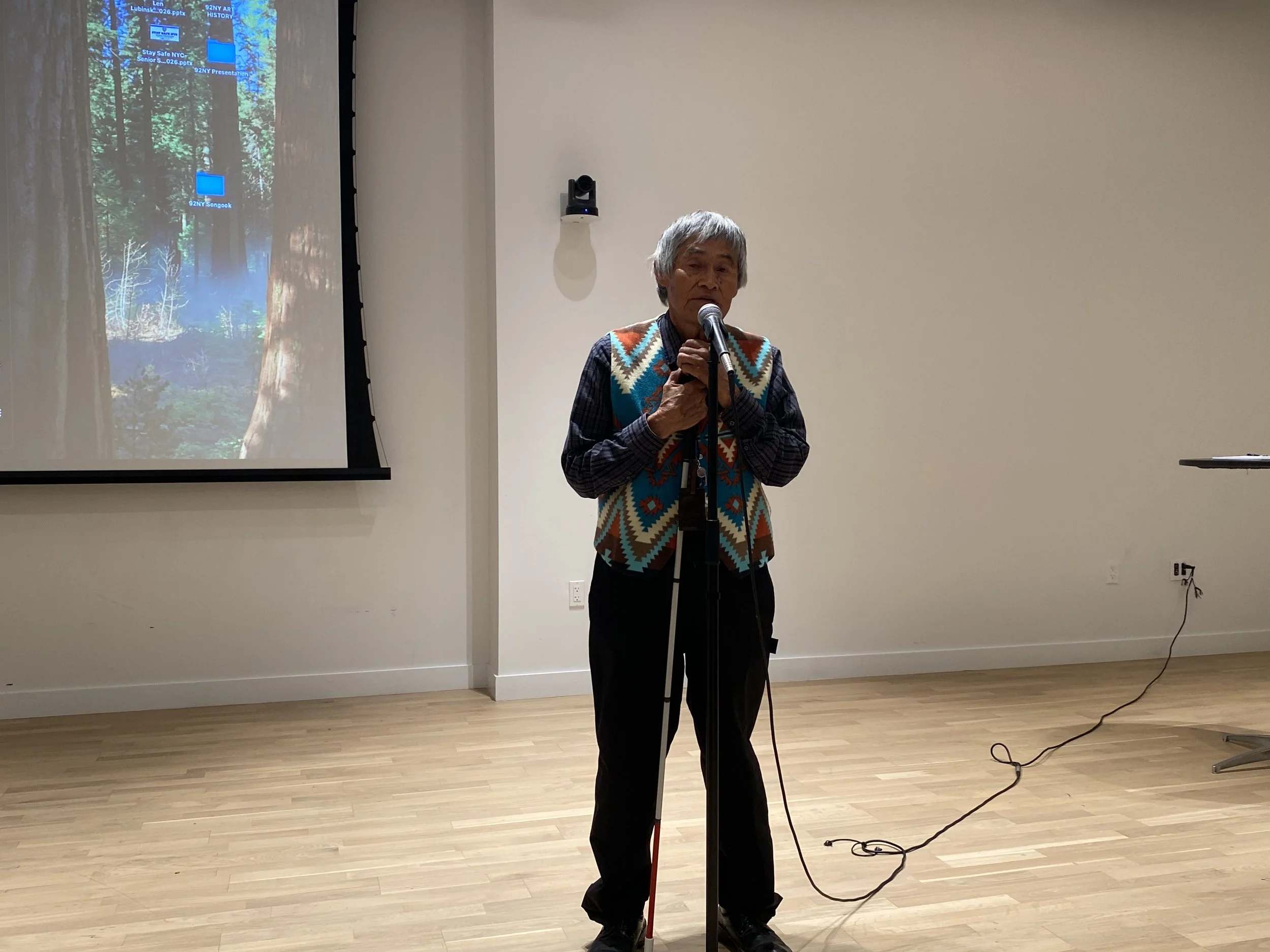
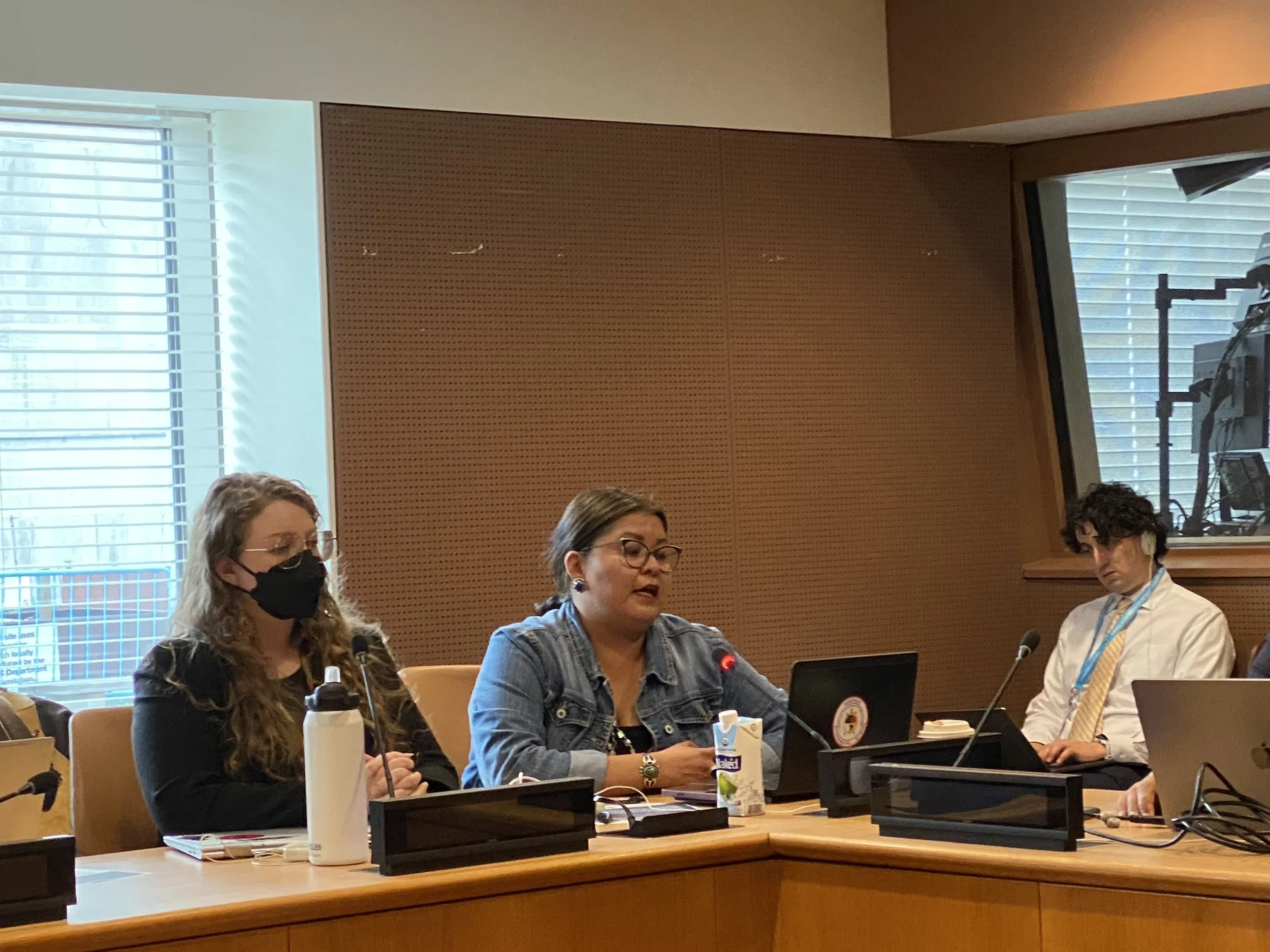
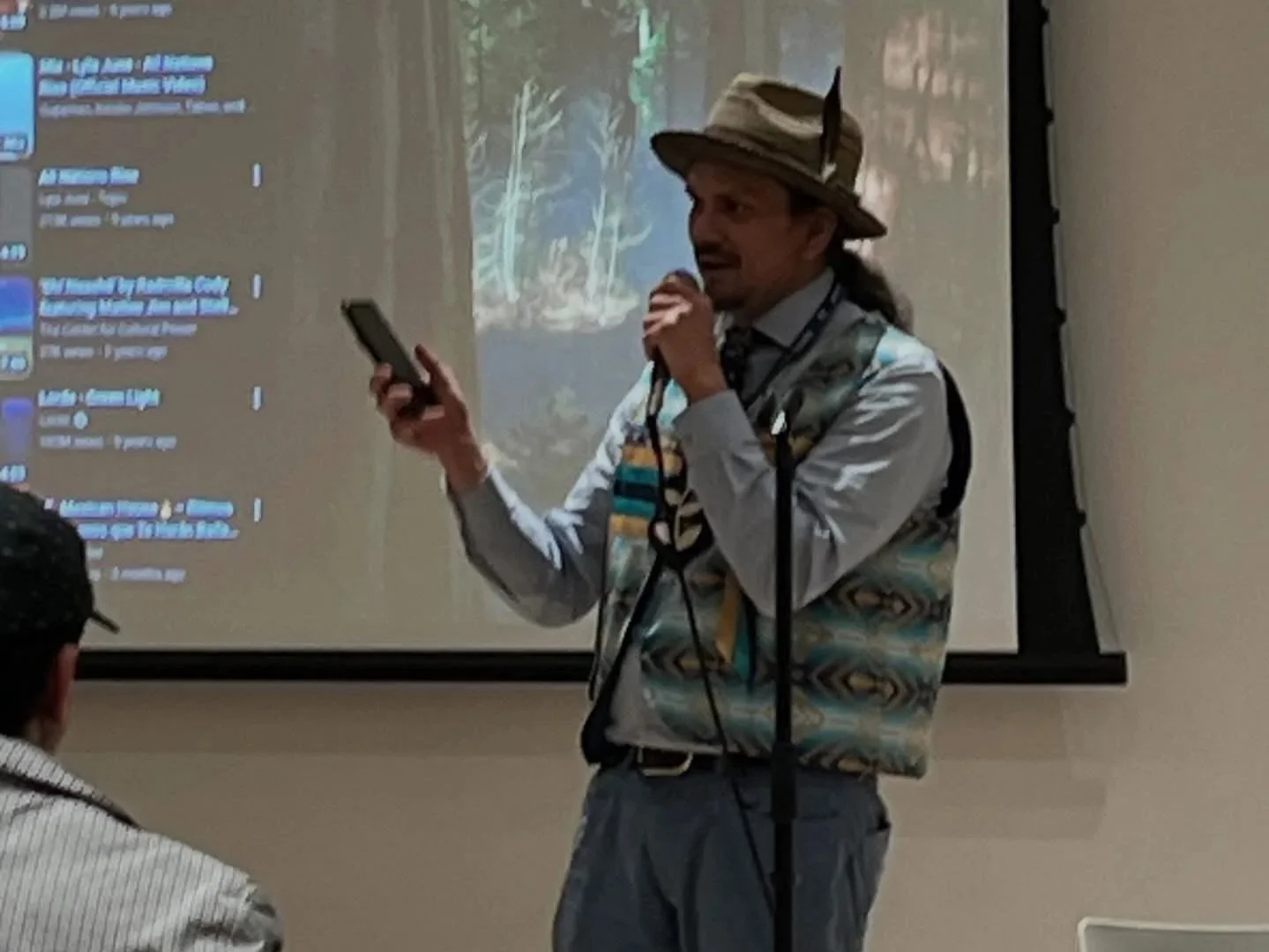
Petuuche Gilbert sharing during the Cultural Survival side event.
So I went to be on the panel and CRAFT helped coordinate it as well. I asked my mentor, Petuuche Gilbert, Acoma Pueblo elder and leader to many within his community and beyond. He was already gonna be at the Forum for nuclear issues anyway and he agreed to help and share his experience. This is important because sometimes we forget that people have lifetimes of knowledge and experience on a certain subject or thing. We gotta learn from others so we don’t drive ourselves crazy over something someone else already has an answer or insight to. The panel went well and we did our thing (watch here) but that was only for an hour and I was there for four days total. So what else was going on and what did I learn?
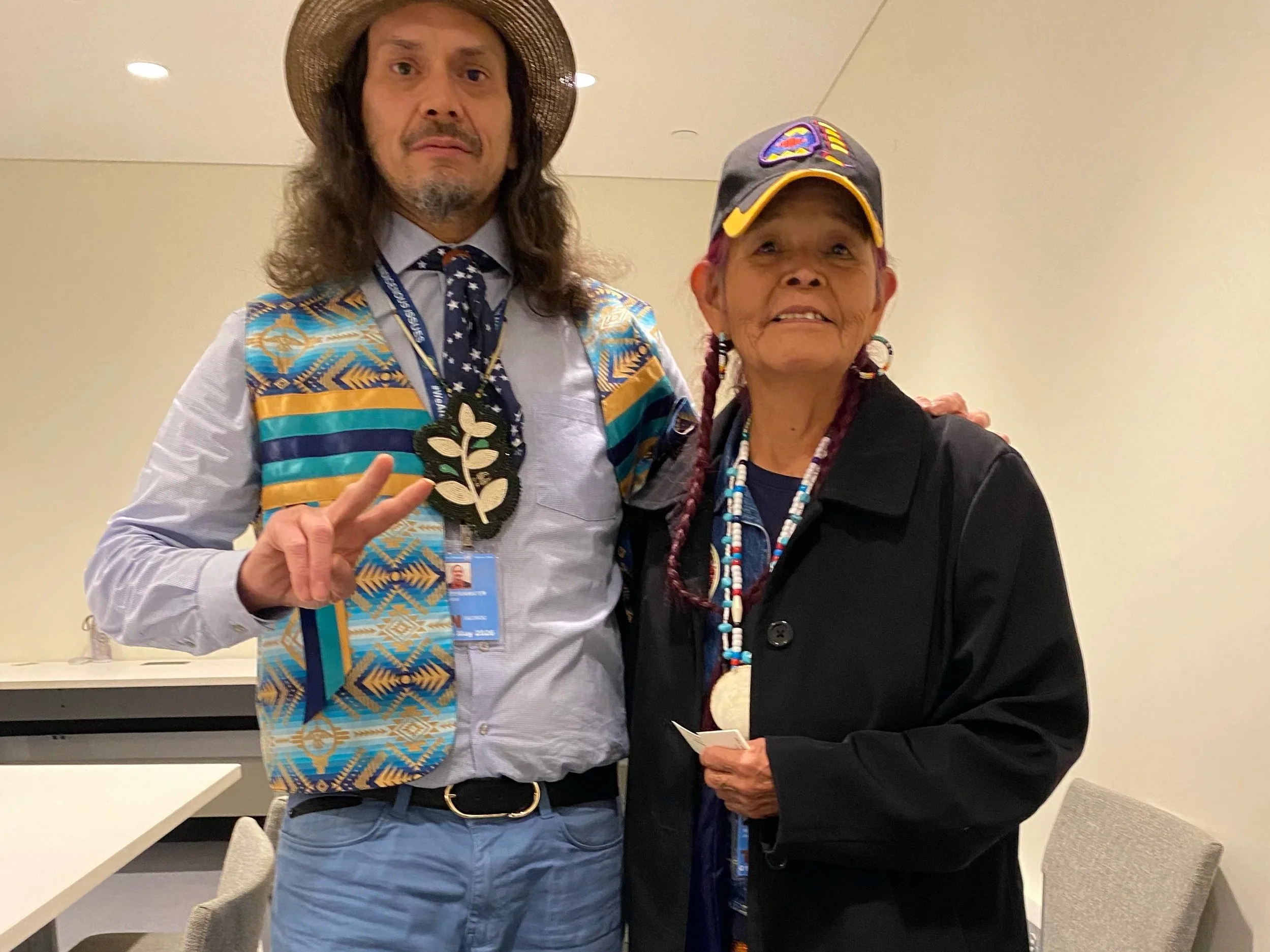
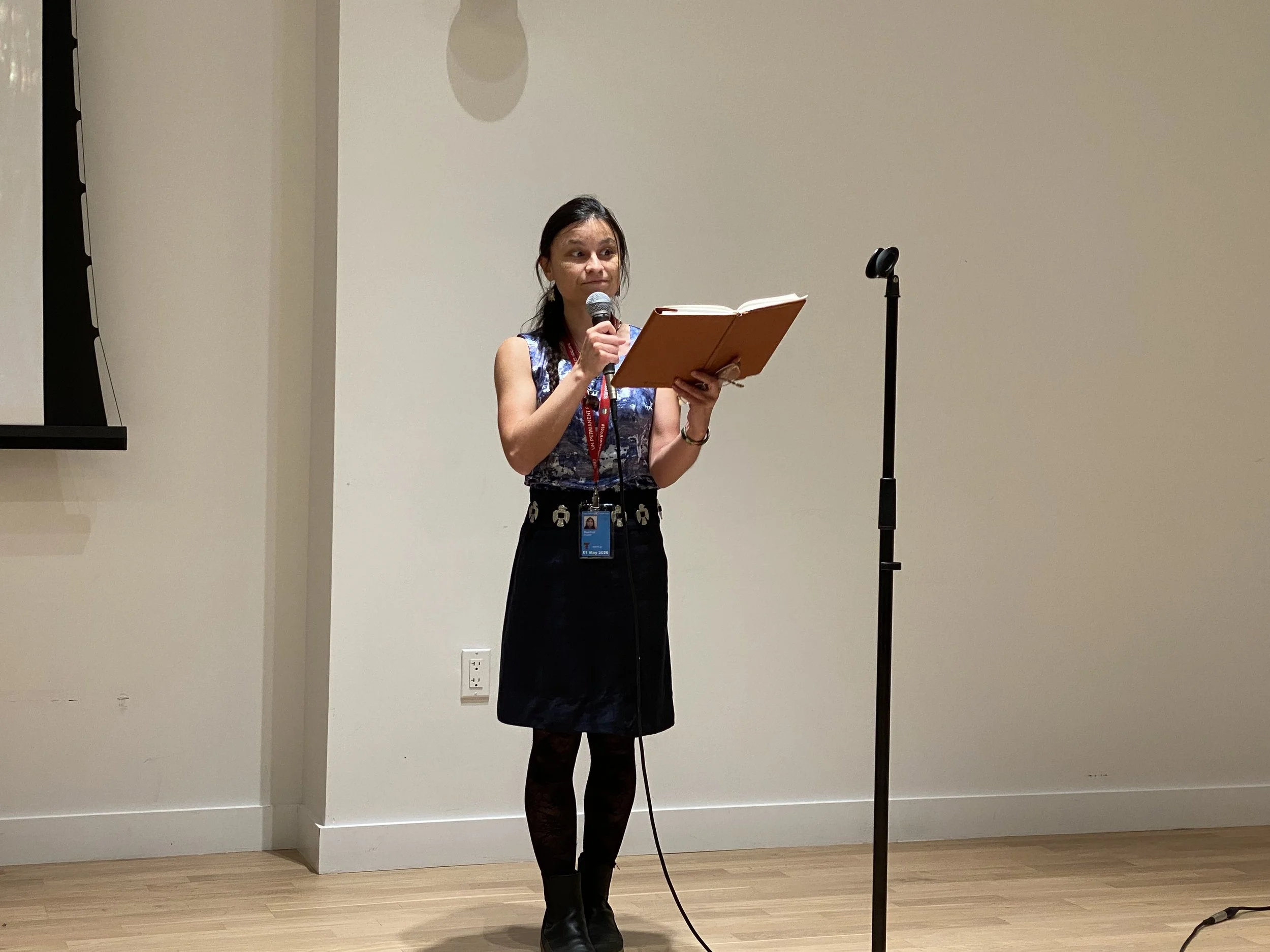
Jean Whitehorse (Dine'): boarding school survivor and forced sterilization survivor who now advocates for Indigenous Women’s Rights.
This year the theme was Health and Indigenous Peoples and the topic fit well. The way I understand it was in 1978 the International Indian Treaty Council had just been recognized by the United Nations as the first organization to get “Consultative Status” to give recommendation and contentions for Nation States to follow. The following year in 1978 The Longest Walk happened which would go from Alcatraz Island across the country to Washington DC to demand water and treaty right protections. They got most of the demands and squashed all of the policies that would have altered our Treaty Rights as Indigenous Peoples and so forth came our voices into the United Nations. Eventually leading to the United Nations Declaration of Rights for Indigenous Peoples (UNDRIP).
While it's heavily debated as to if the UN and UNPFII are worth it. I’m still figuring that part out as well. I can say that while the United States doesn't really care about us, they don’t even send a representative to attend and the UN building is in NYC, NY, USA, there are countries actively helping protect their Indigenous Peoples and their lifeways. These countries activate policies and follow recommended frameworks created at the Permanent Forum. I did a short video on our social media that does a deeper dive you can watch here.
I did learn that the UN and NYC are a “pay-to-play” city and space like Washington DC. It requires time and money to travel and have lodging as well as get around and eat. I used lots of subways, ate lots of bagels/$1 pizza slices believe me LOL! I also had the privilege of having friends and comrades who live in NYC and let me stay there and got some of my travels reimbursed as well so it didn’t cost a ton of money. Shot out to friends and partnerships!! NYC was a busy city but I was able to navigate it pretty well. The bagels were the best fasho tho!
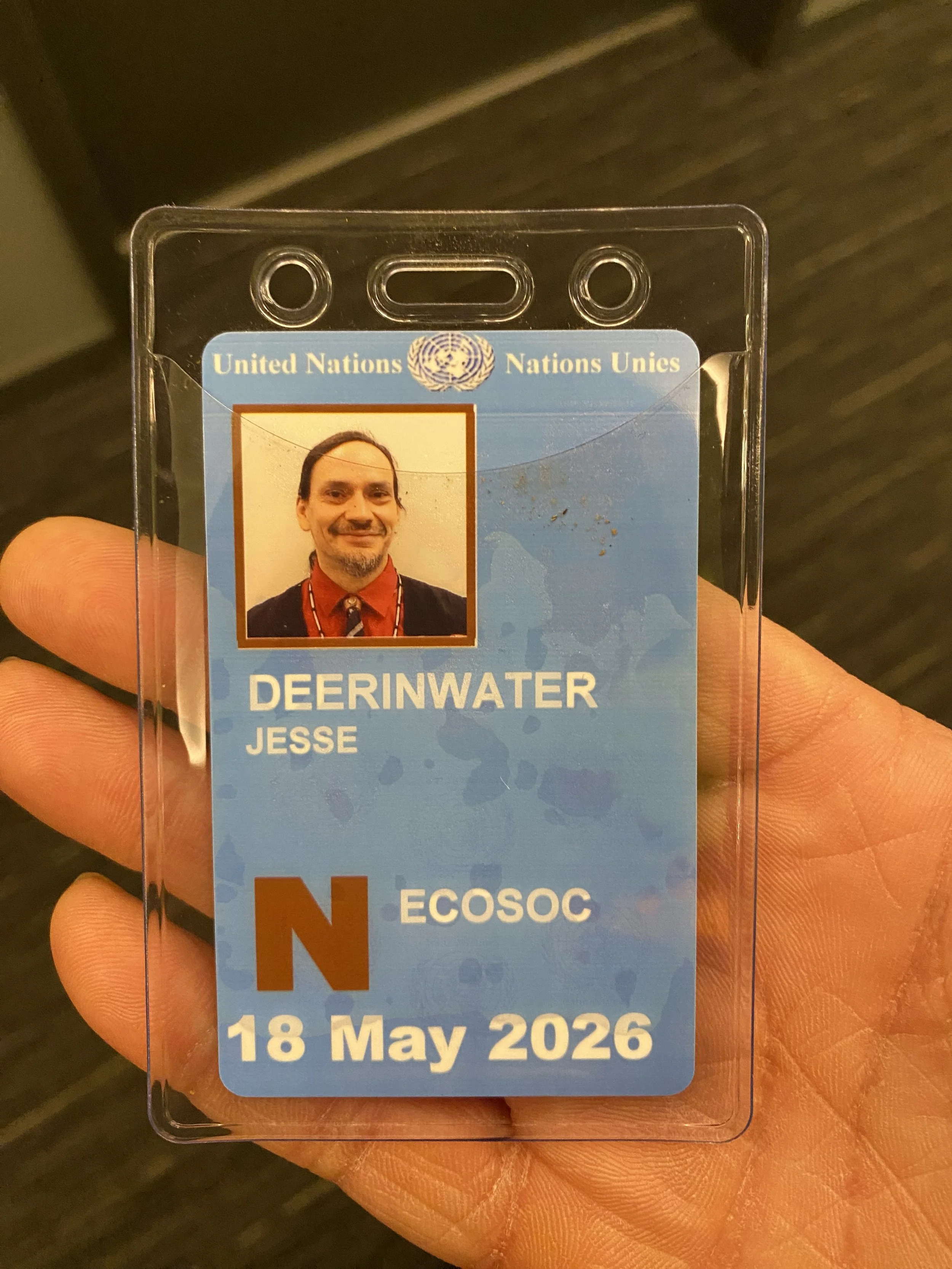
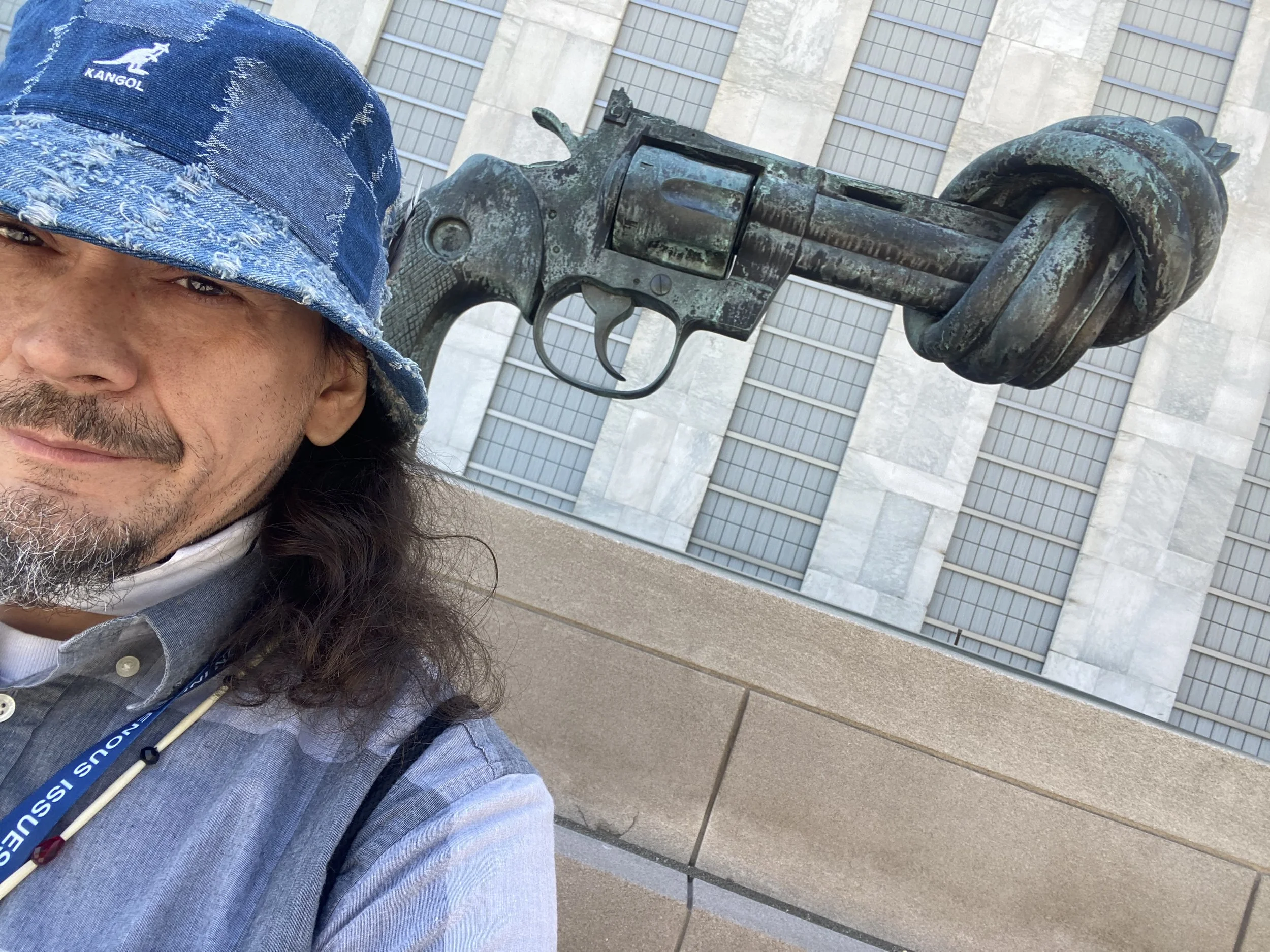
So I made my way into the UN after a strenuous process to get ok’d and that took place in two phases. The first was submitting the proper paperwork and getting accepted before I could even plan to go. Gotta get in ya know? Second was being physically processed upon my arrival to confirm identity and get the official badge, which is used as ID and to scan to access the gate and different locations throughout the UN complex. I might have gotten some extra access since we were Indigenous Media, I'm not sure tho but a couple people asked me how I got into some meetings and I didn’t know so we assumed that is what it was.
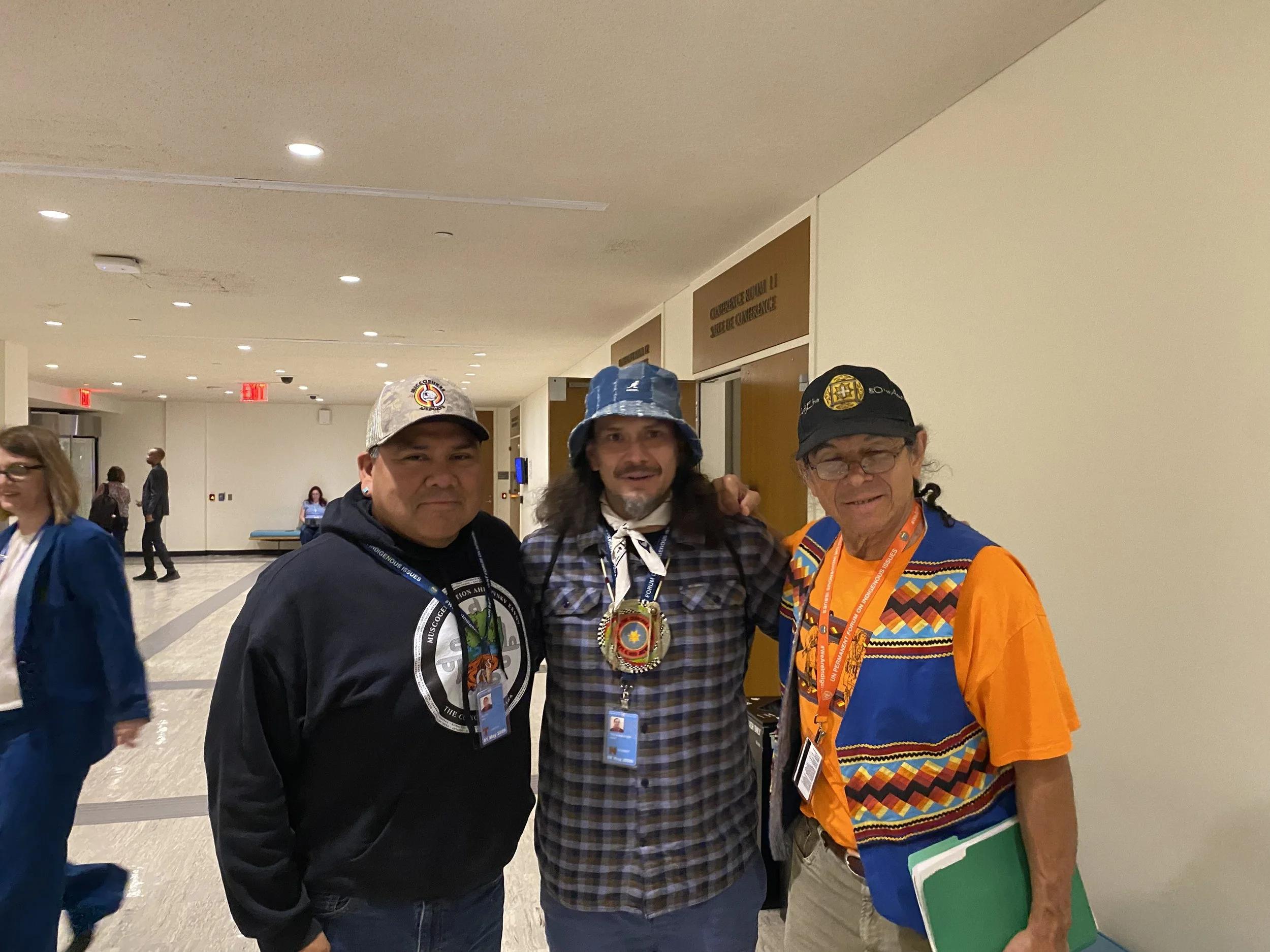
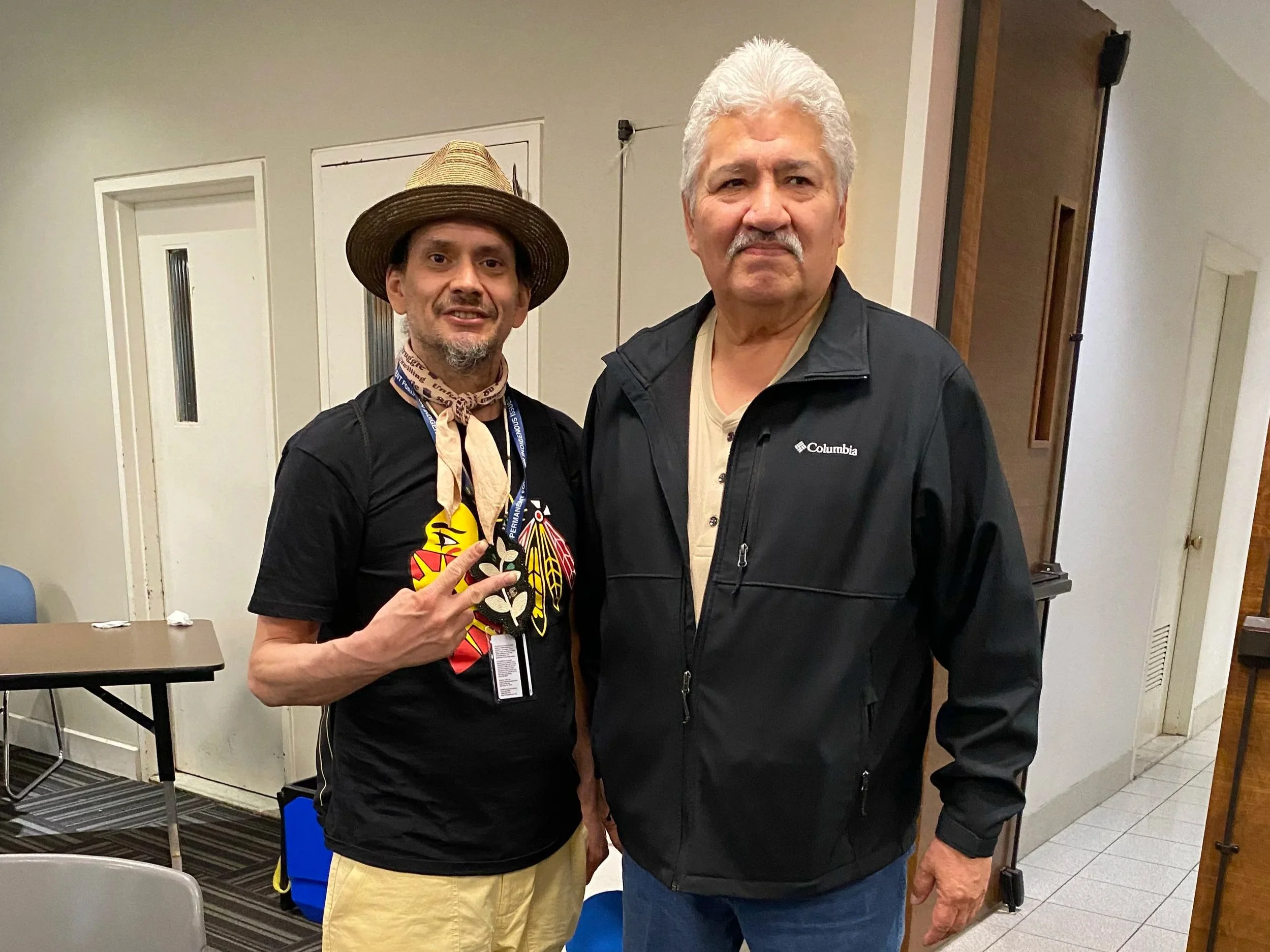
My idea was to learn, this was my first time and I didn't know much about any of this. I shadowed my peoples who BEEN doing this and are very serious about it. I hung with folks from all over the world of all races. My main learning experience was with the Affected Communities and Allies Working Group for a Nuclear Free World Affected Communities and Allies Working Group for a Nuclear Free World, Indigenous Environmental Network (IEN), International Indian Treaty council and of course, Cultural Survival. There was a wealth of knowledge with them for sure, they all have been there since the beginning, and I would be a fool to not tap in with them.
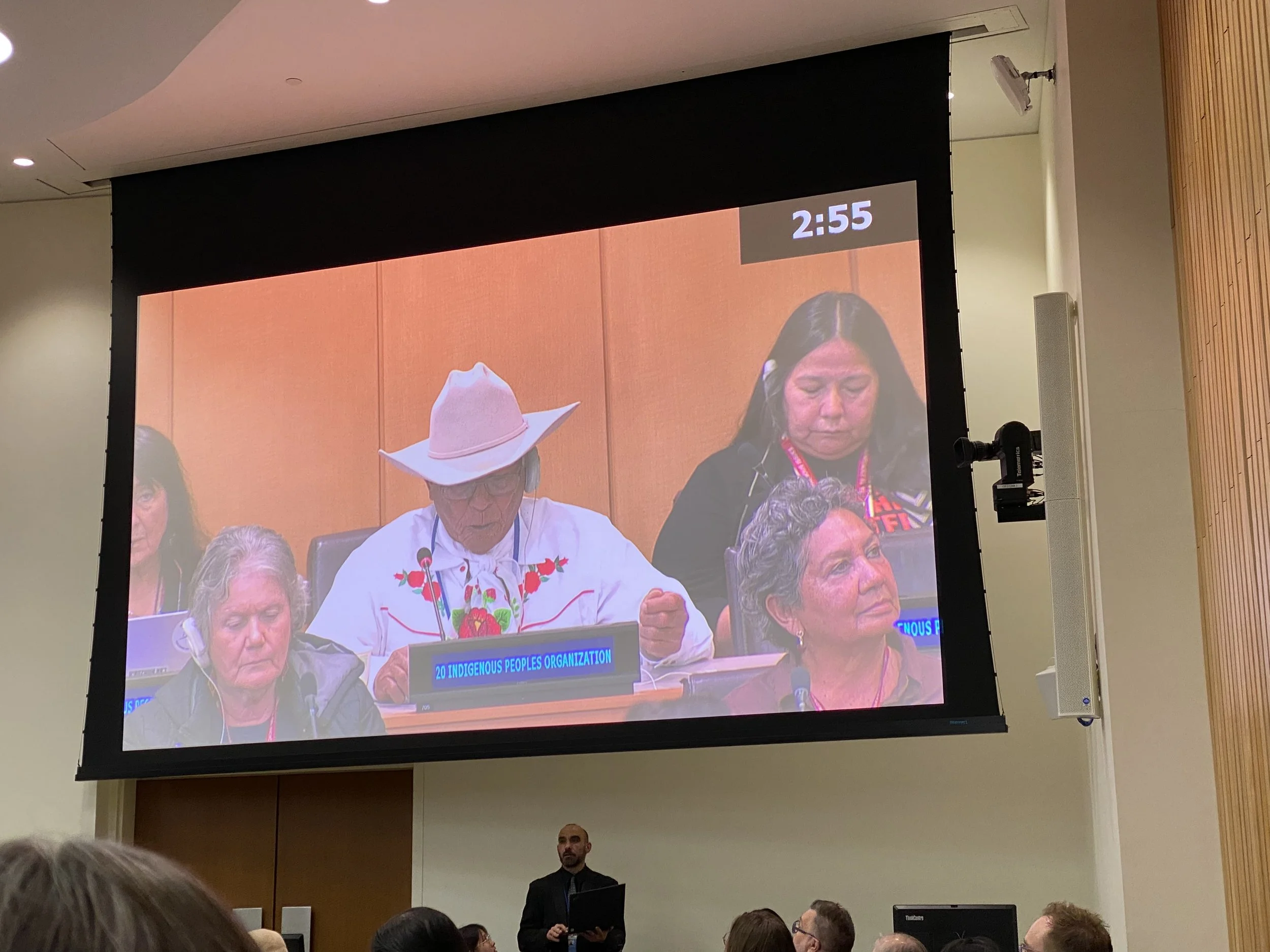
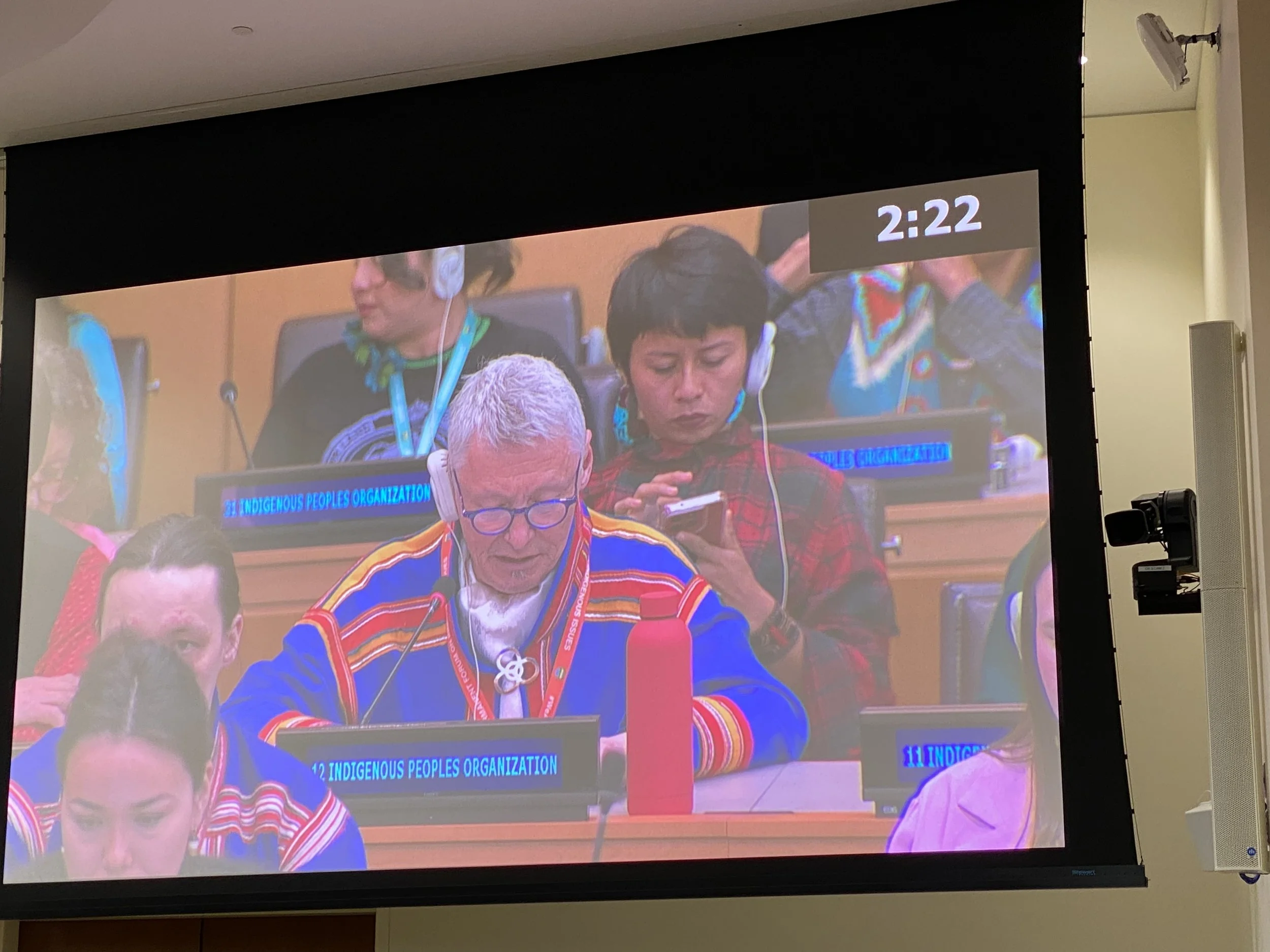
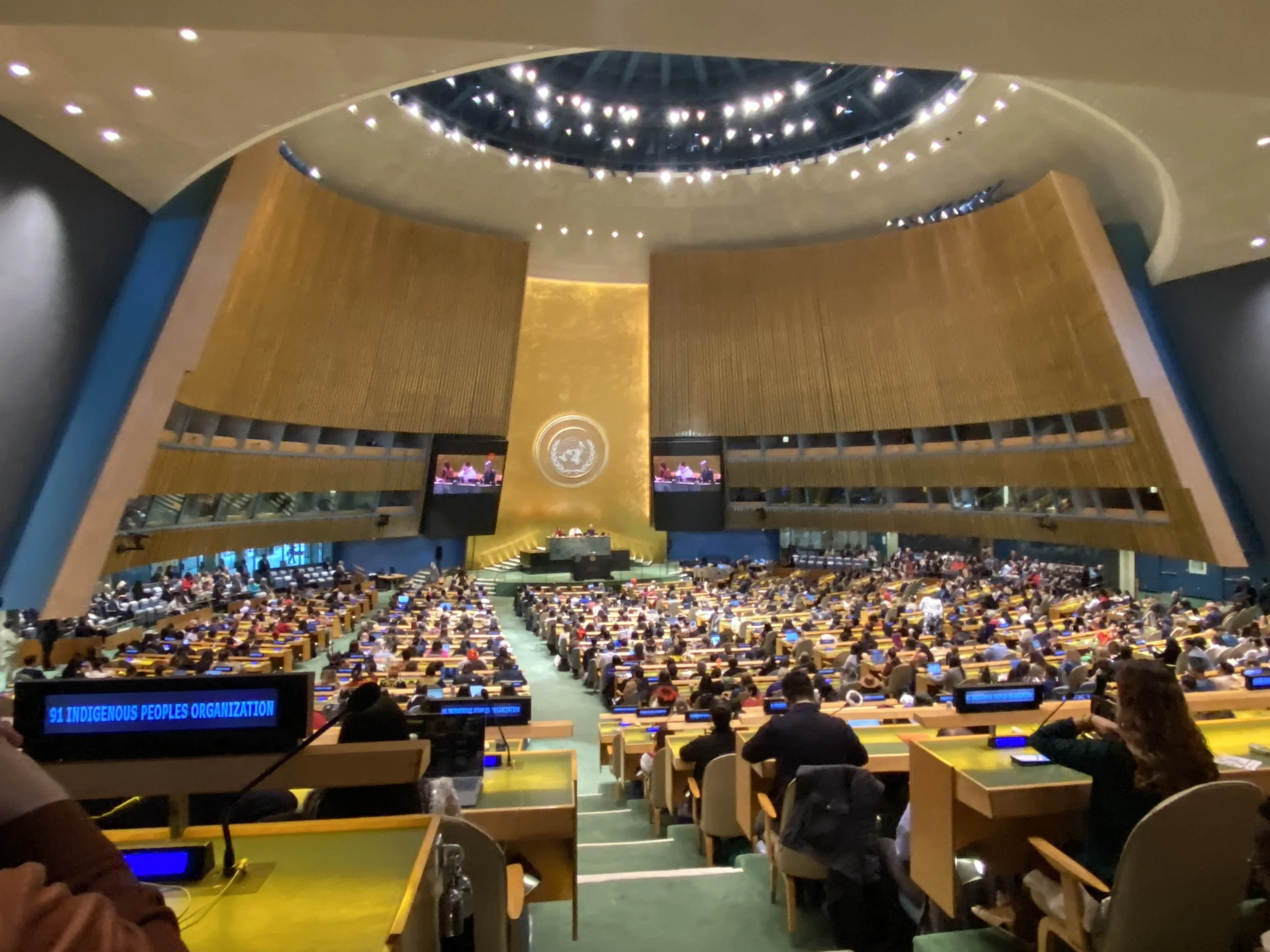
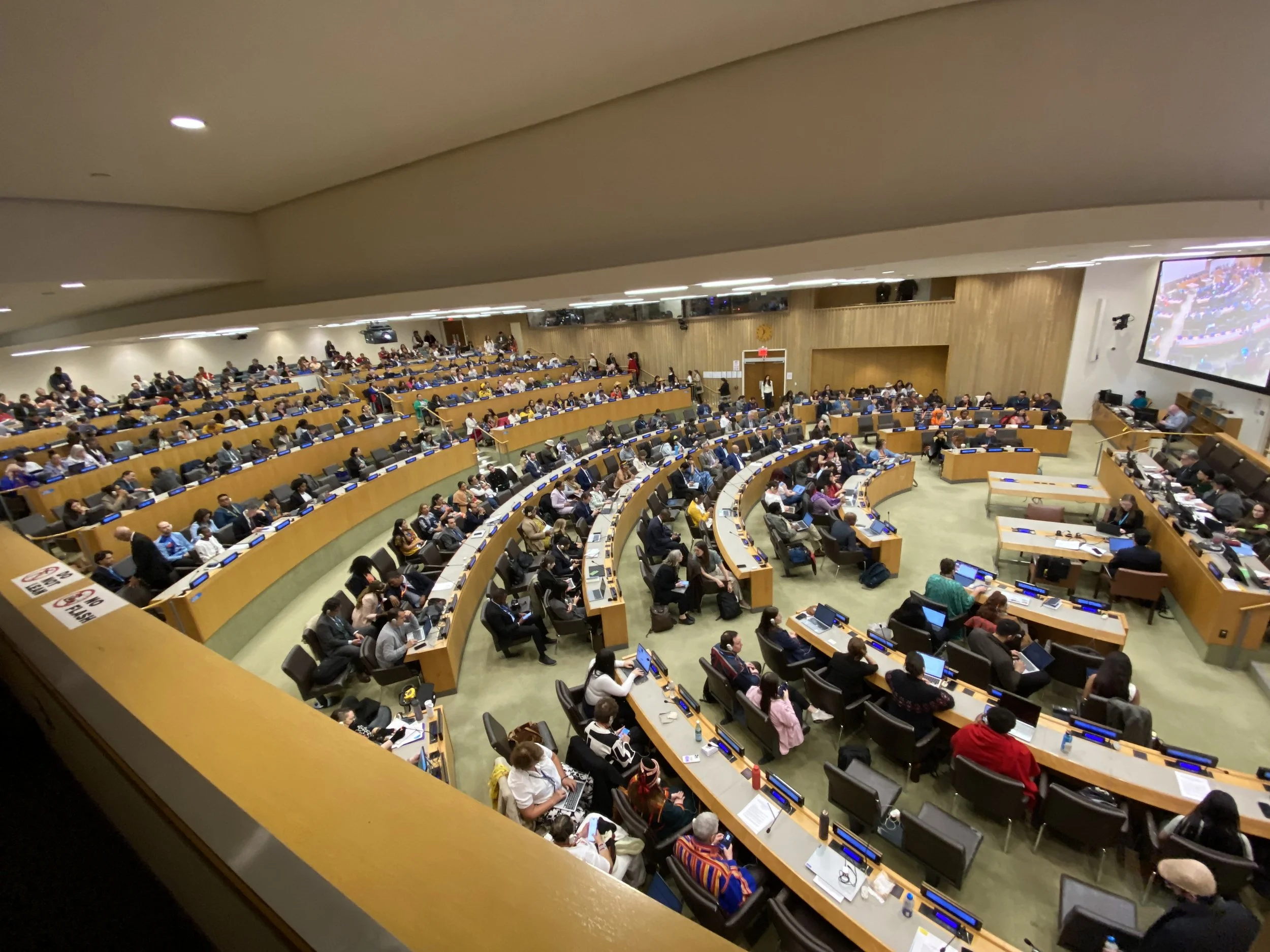
This year's theme was "Ensuring Indigenous Peoples’ health, including in the context of conflict”. Everything from uranium mining to forced sterilizations were covered on the main floor General Assembly and deep into the side panels. Lots of countries were called out and called in for good and bad deeds. Some countries, like Canada, spent most of their time on the floor rebutting Indigenous contentions against it for continued injustices. Other countries agreed with their Indigenous Peoples and spoke about the willingness to work together. Honduras, Ecuador and some African Countries lead the way in good relationships with Indigenous Peoples. I am waiting to see the final report document from this Permanent Forum but I know that the concerns about new nuclear issues are relevant to these times we are in. We can look at talks of new nuclear bomb testing, attacks on reactors and new uranium mining to know that this issue, health and conflict tie together.
Wild how life works, one moment you are agreeing to write about issues that impact you and the next you are at the United Nations talking about it. There are some end goals I am still learning about as far as the PFII goes. I plan on sharing more when I figure them out but for now this was a powerful experience and a new avenue for our work that we explored that feels like there is potential for change.
Anyways, I wanted to share some about this journey to give more info and background to learn more about Indigenous Peoples' fights for rights globally, especially on this nuclear stuff and the relevance to CRAFT’s work.
Wado and Migwetch you all,
Jesse